Utility trenches look simple until you need consistent sewer fall, frost cover on water lines, or hand digging near marked gas. Homeowners in Macomb Township request trenches for new laterals, repairs and service relocations. Here is how those digs usually work. More detail lives on our trenching and septic and sewer pages.
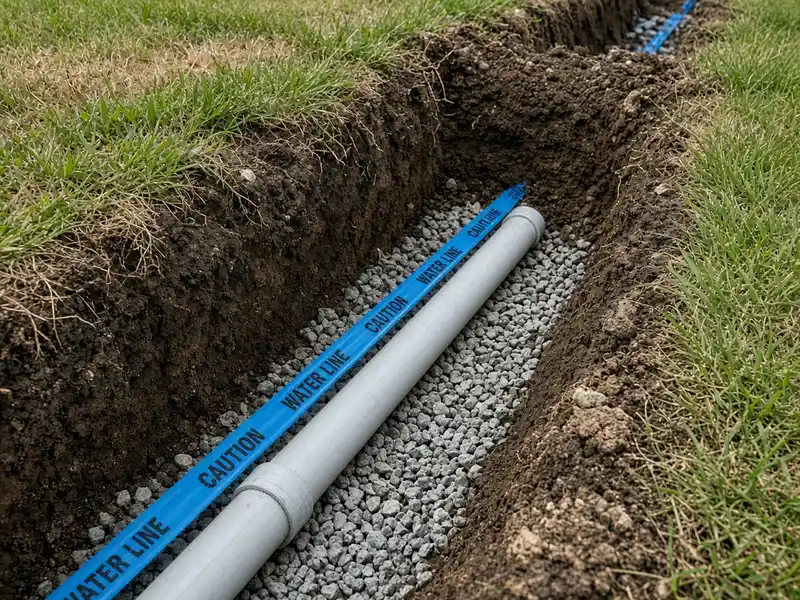
Typical Residential Trenches
- Sanitary sewer lateral to a main or septic tank
- Water service from the shutoff or well equipment
- Combined projects that also relocate downspout or footing drains
Safety First: Locates
File MISS DIG 811 early. Public marks do not show private sprinkler, dog-fence or shed feeds. In tolerance zones near gas and electric, expect hand digging or vacuum excavation per utility rules.
Grade, Bedding and Backfill
Sewer lines need designed slope. Water lines need burial depth that meets local plumbing and frost rules—confirm with the inspector, not a blog. Bedding stone or sand and careful compaction reduce future dips under lawns and drives.
Permits
Trenching tied to plumbing or right-of-way work often needs local permits. In Troy, start with the Building Department and Engineering ROW page. In Macomb Township, start with township building forms. Always verify for your address.
Access Reality Near Hall Road (M-59), Card Road, 21 Mile and Romeo Plank
Tight side yards may force mini excavators. Open lots allow faster production but still need spoil plans so streets stay clean.
Next Step
Request a quote through Macomb Township Excavating with approximate length, sewer vs water, and photos of the route.
Sewer Laterals vs. Water Services
Sewer laterals carry wastewater downhill by gravity (or to a pump when needed). Water services are pressurized. That difference changes bedding, testing and who inspects. A trench that holds both needs careful separation per plumbing code. Do not assume one crew automatically handles both disciplines—ask.
Road Cuts and Restoration
If the lateral runs under the street to a main, pavement saw-cutting, trench plating and asphalt restoration can exceed the dirt work cost. Right-of-way permits and traffic control enter the picture. Budget time for inspections before permanent patch.
Septic Connections
Where municipal sewer is unavailable, trenches serve tanks and fields designed by others. Excavators follow stakeout from the septic designer and health department rules. Protect the field area from truck compaction. See septic and sewer excavation.
Winter and Emergency Digs
Frozen ground slows trenching and can raise cost. Emergency breaks still happen in January. Ask about thawing methods, temporary water, and how spoil will be managed when dumps have limited hours.
What to Put in Your Quote Request
- Sewer, water or both
- Approximate length and depth if known
- Whether the trench crosses driveway or road
- Photos of the route
- Any camera inspection reports for existing pipes
Referral Next Step
Macomb Township Excavating connects you with trenching-capable excavators in Macomb Township and north Macomb County. Send details or review trenching.
Camera Inspections and Existing Lines
Before replacing a lateral, a sewer camera inspection can show bellies, roots and cast-iron condition. That information changes trench length and repair vs replace decisions. Share reports with the excavator so the quote matches reality.
Backfill Under Hard Surfaces
Trenches under drives need compaction in lifts or controlled density fill per local expectations. Settling asphalt a year later is a common complaint when backfill is rushed. Ask how the crew will compact beneath pavement sections.
Macomb Township Utility Trench Notes
Confirm whether your street is on municipal sewer or septic before pricing a "sewer trench." Laterals to a main differ from tank connectors. Road cuts on county or state routes need the right agency's permit. Inside the lot, MISS DIG still comes first. Share camera reports and approximate depths when requesting a referral through contact or read trenching.
Materials Staging and Lawn Protection
Stage pipe and stone on driveways or plywood when possible. Open trenches need barriers. After backfill, monitor settling through the first season, especially under new gravel or asphalt patches.
Closing Thought
Trenching success is half digging and half coordination with plumbers, inspectors and road agencies. Get the paperwork path clear, then hire carefully. Request an excavator introduction via contact or read trenching.
Coordination With Plumbers and Electricians
Agree who digs, who lays pipe, who tests and who calls for inspection. Shared trenches need clear rules on bedding and backfill. A ten-minute meeting before the first bucket prevents a two-day rework when someone assumed tracer tape or stone was "already handled."
Local Cross Streets and Access Photos
For Macomb Township trenches, note whether trucks will use a finished driveway or a soft shoulder near the mile roads. Photos of gates, fences and the route to the cleanout save a wasted site visit. Clay sticking to tires after rain is normal—ask how the crew will clean the street before they leave for the day.
One More Planning Tip
If your trench crosses under a new driveway that is about to be poured, dig and restore the crossing before concrete whenever you can. Cutting new concrete later costs more and looks worse. Mention upcoming paving in your quote request so the excavator sequences correctly.
Keep Learning
Use the related service pages linked above for scope details, then come back to this guide when you are comparing written proposals. Clear scopes beat vague promises. When you are ready for an introduction to a local excavating contractor, use the quote form or call the number at the top of the page.