Inground pool excavation is a specialized dig: the shape must match the steel or wall package, the bottom elevations have to be right, and spoil trucks need a clear path. Macomb Township Excavating helps Macomb Township homeowners connect with excavators who work alongside pool builders in Macomb County.
How Pool Digs Differ
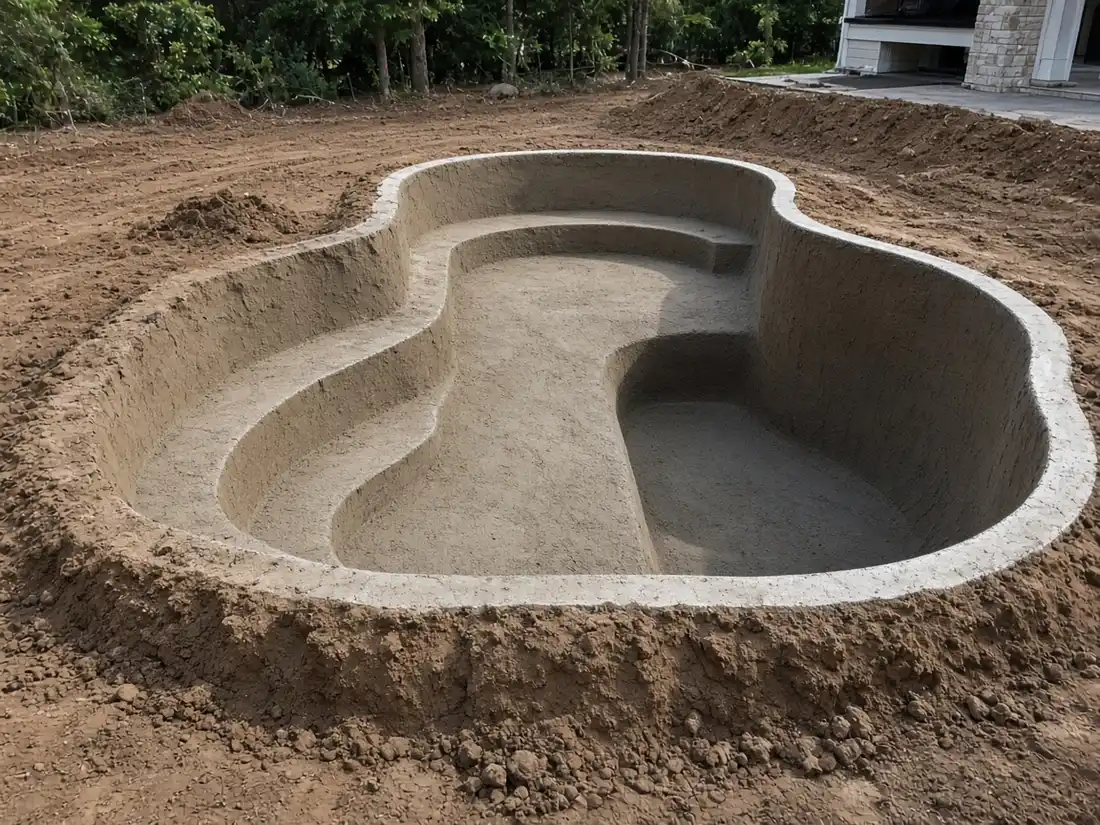
Pool holes are shaped, not just rectangular basements. Benches, deep ends and spa sections need accurate cutting. Over-digging wastes concrete; under-digging delays the wall crew. Many pool companies bring their preferred excavator; if you need an independent digger, say so early.
Access and Spoil
Rear-yard pools in Macomb Township subdivisions often need machine access beside the house. Soft lawns near Hall Road (M-59), Card Road, 21 Mile and Romeo Plank may need mats. Spoil volume is large; plan haul-off or placement.
Groundwater and Weather
A high water table turns a pool dig into a pumping operation. Clay smears and can collapse freshly cut walls when soaked. Timing around dry weather helps.
Related Site Work
Pool projects may include patio base prep, drainage and old deck demolition.
Request a Connection
If your pool builder needs an excavator, or you are still planning, contact us with approximate size, access notes and your city.
Planning Checklist for Macomb Township Property Owners
Before the machine arrives, gather what you can: property corners or a recent survey, foundation or civil plans, HOA rules if any, and photos of access paths. Write down where you have seen water ponding. Note underground features you installed yourself. This preparation shortens the site visit and reduces change orders.
In Macomb County, inspectors care about frost depth, setbacks and erosion controls. Your excavator should know typical local expectations, but the permit holder—often you or your builder—remains responsible for compliance. If your project crosses a drain easement or county right-of-way, expect extra paperwork and possible restoration bonds.
Macomb Township clay can turn a simple trench into a pumping job after a wet week near Hall Road and the northern mile roads. Moisture changes both production rates and restoration needs.
Spoil, Fill and Compaction
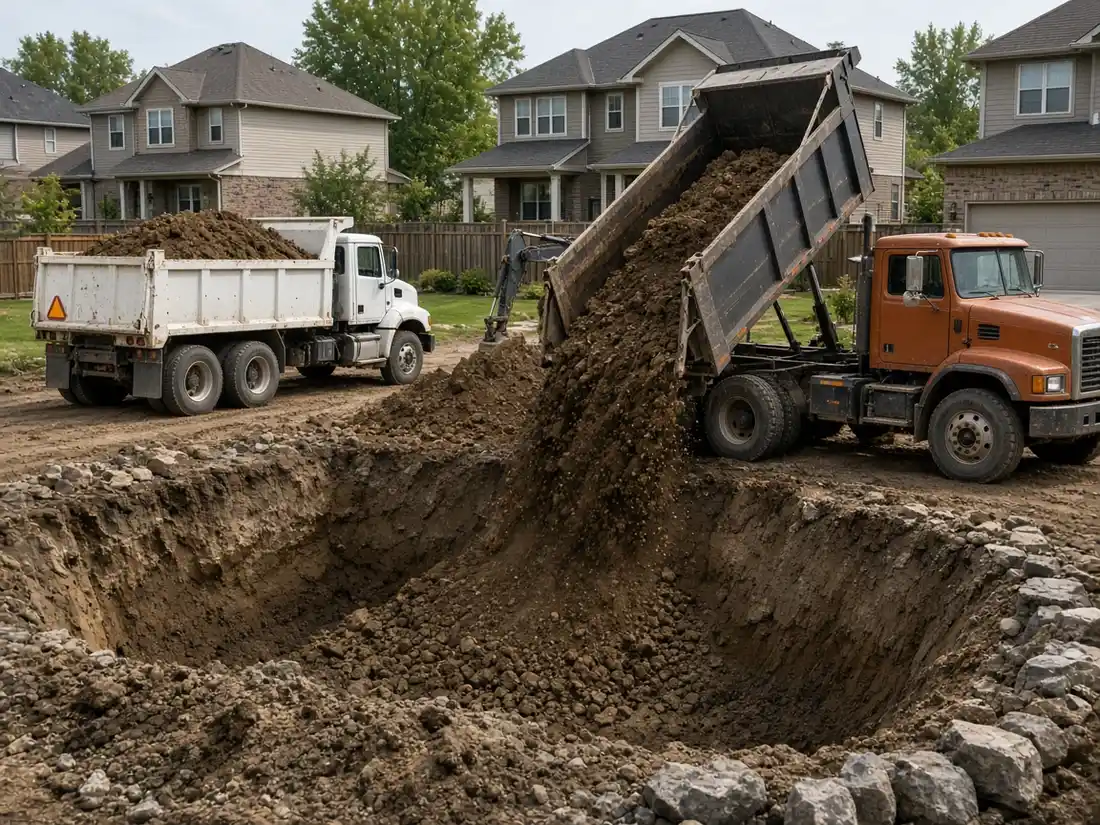
Excavating creates material that is rarely perfect fill for structural areas. Mixed clay spoil may be unsuitable under slabs or drives without processing. Ask what material will come back as backfill and whether structural fill or MDOT-type aggregates are included where the plan requires them. Compaction in lifts matters beside foundations; dumping and driving over a pile once is not compaction.
Safety Around Open Excavations
Open basement holes and deep trenches are attractive nuisances. Require fencing or barricades overnight, especially on busy Macomb Township streets with children nearby. Keep spoil piles back from the trench edge. Never enter a deep trench that lacks proper protection—utility work has specific OSHA rules your contractor should follow.
How Quotes Are Usually Structured
Many excavators quote a lump sum for a clearly defined scope: dig to elevations on plan X, haul Y loads, rough grade to Z. Time-and-materials makes sense when unknowns are large, such as demo of unmarked footings. Hybrid quotes use a base scope plus unit prices for extra depth or rock. Whatever the format, get inclusions and exclusions in writing.
After the Dig
Foundation, plumbing, waterproofing or pool wall crews need a workable bottom and safe access. Ask who communicates elevations to the next trade. If rain fills the hole, who pumps it? Clarify that before the sky opens. Lawn restoration may be a separate landscaping bid; do not assume seed is included.
Related Services Nearby
Homeowners in Macomb Township, Shelby Township, Chesterfield Township, Clinton Township, Washington Township, Ray Township and New Baltimore often combine excavating with grading and drainage in one mobilization. If you know you need both a basement dig and a swale, say so early so the contractor can price one setup instead of two trips.
Documentation Worth Keeping
Save the written quote, change orders, dump tickets if provided, and photos of the open hole before backfill. Lenders and future buyers sometimes ask what was done beside a foundation. Photos of marked utilities before digging also protect everyone if a private line was missed on the locate.
Communication During the Job
Ask who your day-of contact is—owner, foreman or both. Weather calls happen. A short text that the crew is delayed beats wondering why the street is empty. If you will not be home, leave gate codes and a marked priority list (what must be done first if time runs short).